
PitPat is one of the most popular GPS dog trackers in the UK, and it's now available in the US too. Its biggest selling point is simple: no subscription. You pay once, and GPS tracking works for the life of the device.
That's genuinely true. But there's a misconception that comes with it, and it trips up a lot of buyers. "No subscription" doesn't mean "no network dependency." The PitPat GPS tracker still needs cellular coverage to work. And understanding that distinction matters before you buy one.
How does the PitPat GPS tracker actually work?
PitPat uses GPS satellites to find your dog's position, then transmits that data over cellular networks (LTE-M and NB-IoT) to the PitPat app on your phone. The SIM card is factory-installed and PitPat covers all the data costs. No monthly fees, ever.
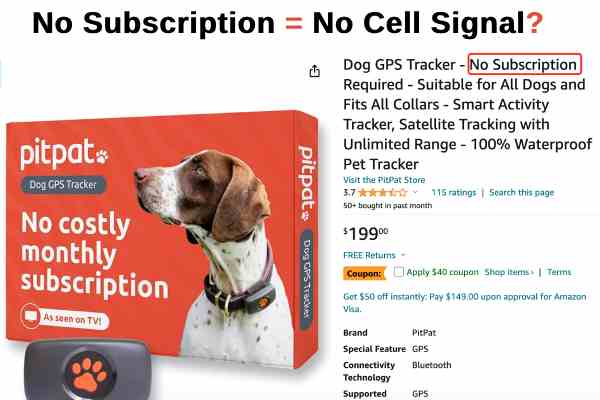
At $159 in the US (down from $229) and £149 in the UK, it's one of the most affordable GPS trackers on the market. It weighs 30 grams, charges wirelessly, and clips onto any collar. The 42-day return policy means you can test coverage in your area before committing.
Why does "no subscription" still mean "needs cell service"?
Because PitPat uses cellular networks to transmit your dog's location. The "no subscription" part means PitPat pays the carrier bills on your behalf. But the tracker still needs a cell signal to function.
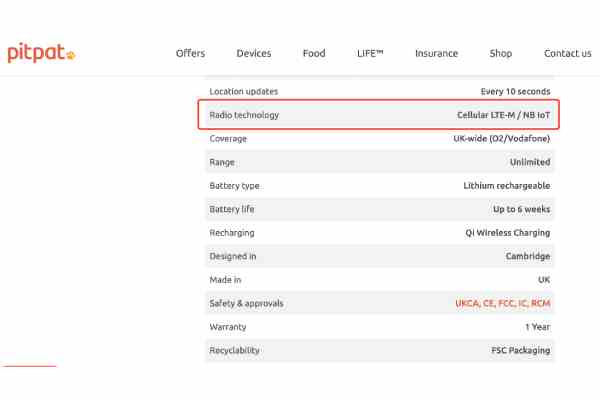
This is the part that catches people off guard. PitPat's marketing says "no subscription," and buyers hear "no dependency." But the SIM being paid for doesn't change the fact that it still needs a cell tower to reach.
If you're in a city or suburb with solid LTE coverage, this won't matter. But if you're rural, hike in areas with patchy service, or your dog tends to bolt into fields where signal drops, the tracker can struggle or fail entirely. PitPat themselves recommend checking coverage before buying on their FAQ page.
Where does PitPat work well?
PitPat works well in urban and suburban areas with reliable LTE-M or NB-IoT coverage. It's available in 34 countries, including the US, UK, Canada, most of Western Europe, Australia, and Japan.
If you live in a city or well-covered suburb and your dog walks in parks and neighborhoods, PitPat is a genuinely strong option. The activity tracking is excellent, the app is well-designed, and at $159, the price is hard to beat. And the 42-day return policy lets you confirm coverage before you're locked in.
Where does PitPat struggle?
Rural areas with weak or no cellular signal. The tracker can take 2 to 20 minutes to get a first GPS fix in low-coverage zones, and battery drains faster when the device is searching for signal.
This is the most common complaint in PitPat's reviews. Users in rural parts of the UK and US consistently report weak signal, inconsistent tracking, and the tracker failing to connect on countryside walks.
The battery issue compounds the problem. PitPat claims up to 6 weeks of battery life, and in strong coverage that holds up. But in weak signal areas, the tracker works harder to maintain a connection and can drain in a few days instead.
What's the alternative if you're in a rural area?
Radio-frequency GPS trackers don't use cellular networks at all. They send your dog's position directly from the collar to a handheld controller you carry, with no cell towers or phone apps in between.
The Aorkuler GPS Tracker 2 ($249.99) is the most direct alternative. It updates every 3 seconds, reaches up to 3.5 miles, and works in places with zero cell coverage. No phone, no app, no subscription. The trade-off: no activity tracking and no map view (direction and distance on a handheld instead).
If you're mostly urban, PitPat is probably the better fit. If you're rural or off-grid, a radio-based tracker is the safer choice. We compare both in our subscription-free tracker roundup.
The bottom line
PitPat is a genuinely good tracker for the right buyer. No subscription, strong activity tracking, and at $159 it's excellent value for urban and suburban dog owners.
Just know what "no subscription" means and what it doesn't. It means no monthly fees. It doesn't mean the tracker works everywhere. If cell coverage is reliable where you walk your dog, PitPat is a solid pick. If it isn't, you need a tracker that doesn't depend on it.
Leave a comment